30 Min Class & 1 Hour Class
All ages · 30–60 min
Two class lengths, no age limit. Sessions run 30 to 60 minutes and focus on note reading, technique, and musicality—so every student builds a strong foundation and a lifelong love for piano.
Lesson Structure
- Warm-up & technique
- New concepts & repertoire
- Theory & practice review
Weekly Focus
- Fluent note reading & sight-reading
- Hand position & dynamic control
- Written theory & ear training
Practice Goals
- 3-4 days weekly recommended
- 15-20 minute focused sessions
- Access to practice tracking tools
The Year at a Glance
Foundations
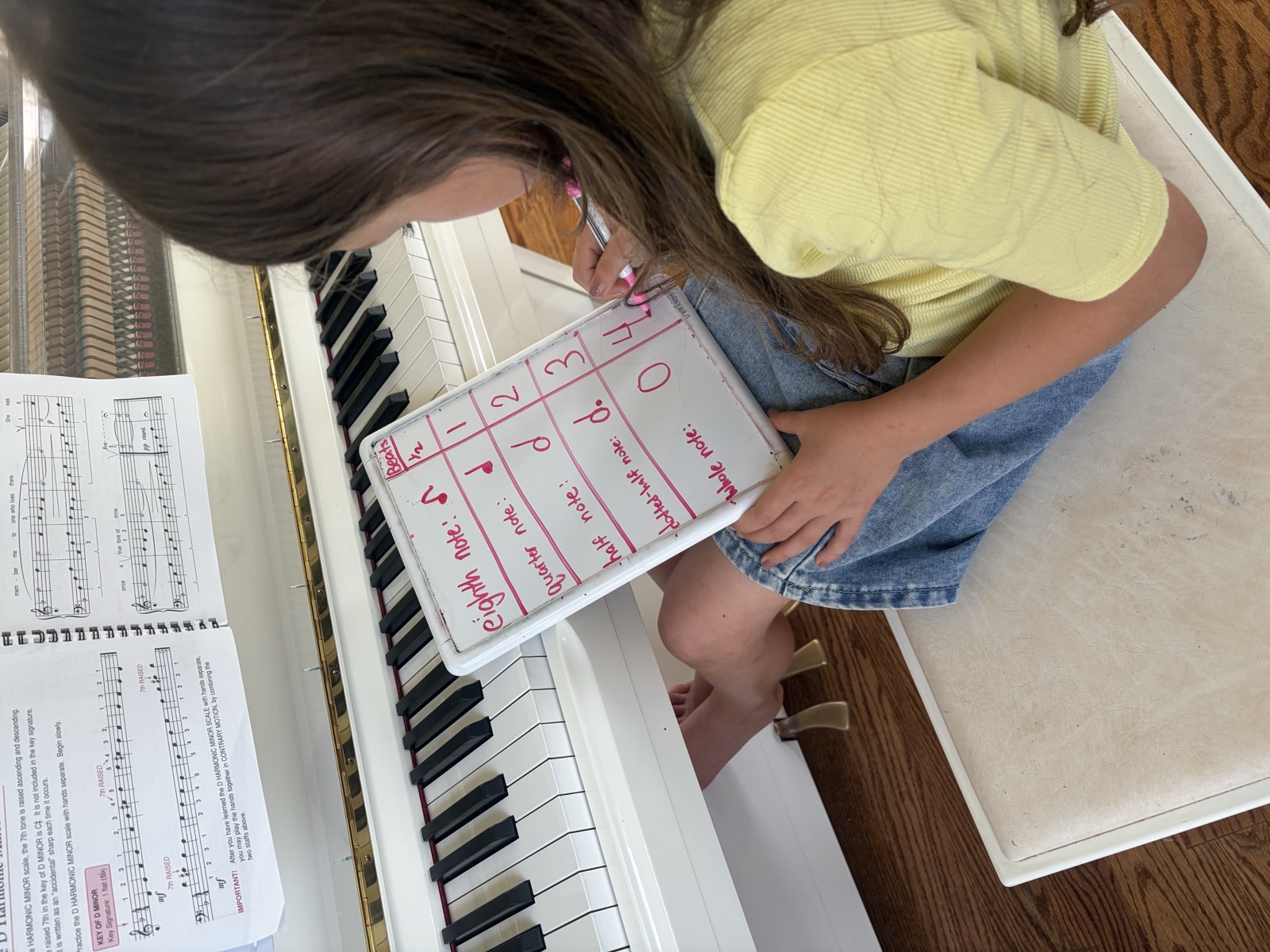
Establishing solid habits. Focus on middle C position, basic rhythm reading (quarter & half notes), and proper hand posture.
Building Skills
Expanding the range. Introduction to C Major scales, simple hands-together pieces, and early sight-reading exercises.
Expanding Repertoire
Exploring style. Working on contemporary pieces, learning basic chord structures (triads), and preparing for performance.
Polishing & Performance
Refining technique and musicality. Memorizing recital pieces, building stage confidence, and year-end progress assessment.
The Note by Note Method
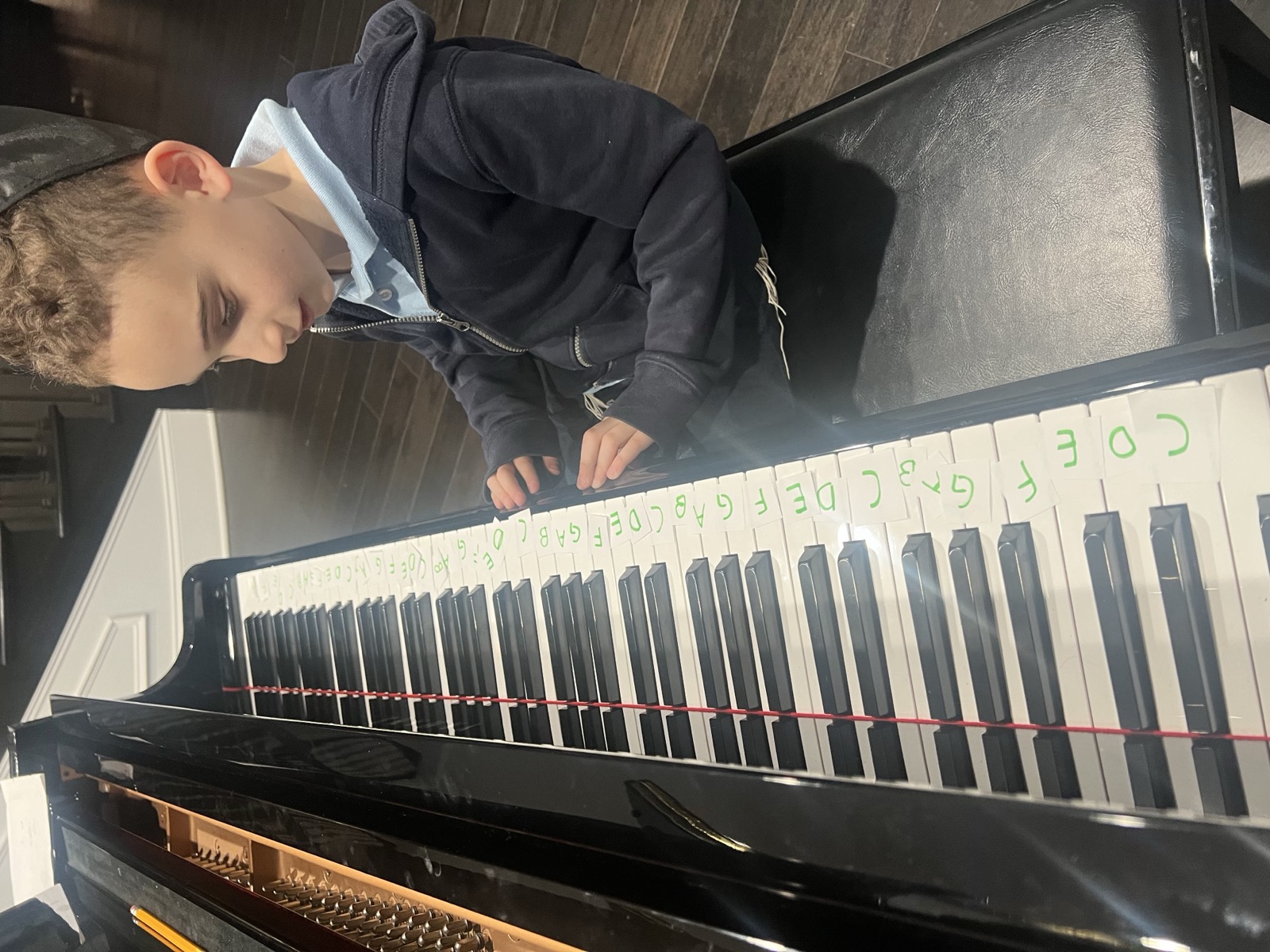
For every student, the balance between disciplined learning and engaging fun is crucial. We use a personalized approach that adapts to how they learn best—no age limit, 30 Min Class or 1 Hour Class.
By blending traditional classical technique with modern repertoire and interactive music games, we ensure students stay motivated while building a technically sound foundation they can rely on.
Included in Tuition
Custom Plans
Curriculum tailored to each student's pace, learning style, and musical interests.
Progress Tracking
Monthly check-ins and detailed feedback sent directly to parents.
Performances
Opportunities to perform in bi-annual studio recitals to build confidence.
Resource Library
Full access to our studio's sheet music library and practice apps.
A Typical 30–60 Minute Lesson
Warm-up
Finger exercises, scales, and rhythm clapping to get hands and mind ready for learning.
Skill Focus
Reviewing previous assignments, addressing technical challenges, and introducing new music theory concepts.
New Repertoire
Sight-reading and breaking down a new piece of music, focusing on phrasing, dynamics, and hands-separate practice.
Interactive Practice
Playing music games or doing guided practice on challenging sections to ensure understanding before going home.
Closing Notes
Writing down the week's practice assignments, placing stickers on completed pieces, and packing up.
What Parents Say
"The structure is exactly what my 9-year-old needed. She's not only learning to read music, but she actually wants to practice without me reminding her. The mix of classical and songs she recognizes keeps her so engaged."
Sarah M.
Parent of Chloe (Age 9)
"We've seen such a boost in Leo's confidence since starting lessons. Mikayla's patience and the clear week-by-week goals make the whole process smooth and enjoyable for him."
James T.
Parent of Leo (Age 11)
Ready to start?
Book your first lesson to experience the studio, meet Mikayla, and find the class length that fits.